
by Eric Bersh | Aug 23, 2022
Being born with cystic fibrosis, a progressive, genetic lung disease, I have had countless health encounters throughout my life. Through these experiences I have learned the power that lies in self advocating for my health in the clinic setting with my doctors and...

by Eric Bersh | Aug 17, 2022
Collaborations across healthcare can save lives – especially when working with patient advocates. For a person like me, who is impacted by a rare, neurological, and incurable disease, it’s my mission to ensure that patients’ perspectives are represented early...

by Eric Bersh | Jul 12, 2022
When I heard the words, “You have Lupus,” I didn’t know the magnitude of how much my life was going to be tested. It started in 1980 when rashes and unexplained fevers plagued my life. Seeing doctors about my symptoms led to solutions that were only temporary. Fifteen...

by Eric Bersh | May 5, 2022
We cannot always choose what happens to us in life, but we can choose how we respond and handle it. Take for example, the time that I had a physical examination with my relatively new primary care physician. They did blood work and I received a report, along with a...

by Eric Bersh | Apr 27, 2022
Curled up on her hospital gurney but unable to sleep, the middle-aged Latinx female trauma patient sighed, “I am tired of being tired.” Before daybreak, “Rosa” (not her real name) had arrived at work to open her New York restaurant but was interrupted by an intruder...

by Eric Bersh | Apr 20, 2022
Editor’s note: When oncology and hospice nurse Theresa Brown was diagnosed with breast cancer, she couldn’t believe how disorganized and unempathic her care was. Ultimately she called it D.I.Y. care, as in Do-It-Yourself: figure out the treatment process, find the...

by Eric Bersh | Apr 13, 2022
For women of color facing breast cancer diagnoses, making decisions is a precarious balancing act, a process with significant implications across healthcare and society. Diagnosis tends to occur at a younger age (that is, before 40, when many screening programs become...

by Eric Bersh | Mar 16, 2022
My husband was on a tele-call as I walked past in the background quiet, as if a mouse. He got off his call and asked “So?” I exclaimed “It’s positive!” He could hardly believe it, I acted so calm. I had already intuitively had a sense—I was pregnant. We were ecstatic,...

by John Novack | Mar 7, 2022
Editor’s note: Moyez Jiwa, MD, founder of The Journal of Health Design, and The Health Design Podcast, believes that we can improve outcomes for patients as soon as today by simply paying attention to the small details that needlessly undermine those outcomes. In...

by Eric Bersh | Mar 1, 2022
In 2004, at age 17, I was diagnosed with an adult-onset muscle disease called limb-girdle muscular dystrophy type 2B (LGMD2B). My diagnostic journey began 10 months prior, the result of a routine blood test after a car accident which yielded concerning biomarker...

by Geri Lynn Baumblatt | Feb 23, 2022
Informal, unpaid family caregivers and care partners are increasingly the backbone of participatory medicine. My father was a physician, but when he was seriously ill, it was really on my mom and me to advocate for him, understand the constellation of conditions,...
by John Novack | Feb 3, 2022
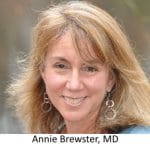
Editor’s note: Annie Brewster, MD, founder of Health Story Collaborative, and a friend to the Society for Participatory Medicine, has just published “The Healing Power of Storytelling: Using Personal Narrative to Navigate Illness, Trauma, and Loss.” In this excerpt...

by Eric Bersh | Jan 27, 2022
After a happy couple has been dating and in a stable relationship for a while, they often decide to take a traditional, next, more permanent step to the institution of marriage. They make an announcement to kick it all off: “We’re engaged!” When we hear about an...

by Helene Clayton-Jeter, OD | Jan 14, 2022
Join the Society for Participatory Medicine (SPM) Mid-Atlantic and HealthScape LifeSciences LLC (HSLS) “Conscious Conversations” workshop on Zoom, February 1! Learn how to apply the principles of nonviolent communications (NVC) from expert and life coach Rob Kanzer...

by Eric Bersh | Jan 11, 2022
As a leader in patient advocacy, I am often asked to speak on the topic of patient centricity and patient advocacy from the biotech/pharma perspective. What do we mean by patient centricity or when we say that patients are at the center of what we do or patients are...

by Eric Bersh | Jan 5, 2022
When Regina Bertlich was diagnosed with metastatic pancreatic cancer, her doctor referred her to palliative care and never told her that clinical trials could be an option. Regina’s daughter, Ines Bertlich, MD, decided to do her own research. Ines and her father and...

by Salene MW Jones, PhD | Dec 20, 2021
When I was training to become a clinical psychologist, my supervisors gave me several pieces of great advice. One told me that the psychologist or therapist is the expert on mental health treatment and research but the patient or client is the expert on their own...

by John Novack | Dec 15, 2021
Pioneers of medical progress are lauded in published articles and by their professional peers. But it is often the patient advocates, particularly those who demanded better treatment, spearheaded clinical trial advances, and bravely took on institutions and standards...

by Brenda Merriweather | Dec 7, 2021
In 2004, as a staff nurse at Baptist Medical Center South in Montgomery, Alabama, I cared for a group of pediatric and adult African-American Sickle Cell patients who would come to my medical-oncology unit for treatment. They would stay a few days, get fluids, and get...

by Lisa Gualtieri, PhD, ScM | Nov 22, 2021
The answer is probably not your medicine cabinet. The answer may be your nightstand, kitchen counter, or a variety of other locations in your home. The question is, where do you store your prescription medications? I became interested in medication adherence through...
 Introducing the CHAMP Principal Investigator: Cait DesRoches (Part 2)April 1, 2026
 Everylife Foundation Community Congress Annual Meeting HighlightsJanuary 19, 2026
 Collaboration is the Best Medicine: Patient-Centered Collaboration Grounded in Caritas®December 16, 2025
 Collaboration is the Best Medicine: It’s the Heart of CaregivingNovember 7, 2025
Recent Comments